Why a Shared Tablet Needs a Clear Home
A shared tablet needs a clear home so everyone can find it, return it, and use it without adding a complicated household routine.
The common mistake with a shared tablet is letting it land wherever the last person used it. That seems convenient until someone needs the device and finds it under a cushion, beside the sink, or in a bedroom with a nearly empty battery. Giving the tablet a clear home makes it easier to find and return without turning device sharing into another household chore.
What does a clear home solve?
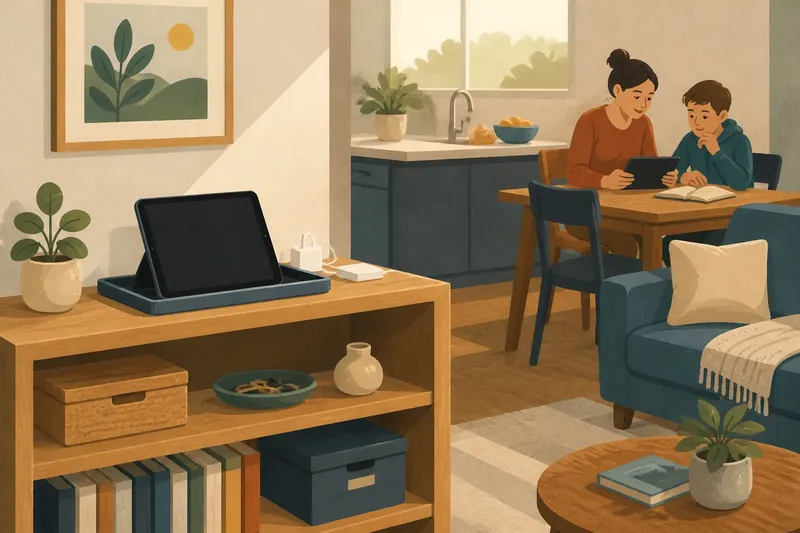
A tablet’s home is one agreed physical place where people can look for it and leave it when they are done. It is not necessarily a locked cabinet or a formal charging station. A shelf, desk corner, or sturdy tray can work if the spot is easy to reach and suitable for the device.
The central idea is to make the tablet’s location predictable, not to control every minute of its use. People can still take it to the couch for a recipe, use it at the kitchen table for a video call, or carry it to another room. The home simply gives the household a known starting and ending point.
That small distinction matters. A strict rule about where the tablet may be used can feel awkward and be ignored. A shared return point asks for one simple action after use, while leaving the rest of the household’s habits alone.
Where should the tablet’s home be?
Choose a place that fits the way people already move through the home. If everyone passes the entryway on the way in, a stable shelf there may be easy to remember. If the tablet is often used for recipes or music, a spot near the kitchen or living area may make more sense. Avoid choosing a location only because it looks tidy in an empty room.
Check the proposed spot for practical fit before settling on it:
- Easy to see: People should be able to notice whether the tablet is there without opening drawers or moving household items.
- Easy to reach: The place should suit the people expected to use and return the device.
- Stable and clear: A tray or shelf should not be crowded by drinks, keys, mail, or objects that might scratch the screen.
- Near a suitable outlet if needed: Leave room for the charger without stretching a cord across a walkway.
- Outside busy spill zones: A surface right beside a sink or frequently used drink station invites avoidable mess.
- Visible to the household: A shared location works best when everyone knows it exists.
Follow the tablet maker’s instructions for charging and storage, and use a location that fits those instructions. If there is no suitable outlet near the best shared spot, keep the tablet there when it is not charging and choose a separate, safe charging place rather than making a long cord part of the room.
How can the household settle on one location?
Start with the places where the tablet already appears. Notice whether it tends to move between the kitchen table, couch, and home office, and ask which shared area is easiest for everyone to reach. The point is not to track anyone’s use. It is to select a return place that feels natural rather than imposed.
Say you notice the tablet is usually used at the kitchen table but often left on the couch. The household might choose a clear shelf near the table as its home. After using the tablet in the living room, someone can return it to that shelf; the observable result is that anyone looking for it has one familiar place to check.
For a week, treat the chosen spot as a trial rather than a permanent decree. If someone repeatedly leaves the tablet elsewhere because the shelf is hard to reach, move the home to a more convenient shared surface. A location that requires reminders every day is probably the wrong location.
What should happen during an ordinary day?
Keep the routine brief enough to fit naturally around use. Before someone takes the tablet, they can check whether it is available and whether it needs charging. When finished, they return it to its home, connect the charger if appropriate, and leave the area clear for the next person.
There is no need to create a sign-out sheet or assign a household tablet monitor. Those systems add work and can make ordinary use feel like borrowing from a workplace. A visible return place handles the practical question—where to look next—without requiring everyone to record what they did.
Charging can be part of the routine when the device is low, but it need not happen after every short use. Keep the charger with the tablet’s home if that is convenient, and avoid leaving a loose cable where it can snag or be pulled. The household can agree on a simple expectation, such as leaving the device ready for the next person when practical.
What if the tablet is in use when someone else needs it?
A physical home cannot make the device available at every moment. It can, however, distinguish between a tablet that is in use and one that has simply gone missing. If it is not in its spot, the household can ask the current user or check the room where it was last used rather than searching the entire home.
For ordinary sharing, a brief conversation is usually enough: ask when the tablet may be free, or explain what you need it for. If two people often need it at the same time, that is a separate access question; changing the tablet’s home will not resolve competing schedules. Keep the location routine focused on finding and returning the device, rather than turning it into a general family scheduling system.
What should you do when the routine breaks?
Expect occasional misses. Someone may fall asleep with the tablet nearby, move it to another room, or forget to return it while rushing out. Treat the first few lapses as useful information about the routine, not as a reason to add punishments or elaborate tracking.
When the tablet is missing, check its usual home first, then ask who last used it. Once found, return it to the agreed spot. If the same room keeps becoming the unintended storage place, consider whether the home should move closer to that room or whether a small tray there would make returning the device easier. Make one adjustment at a time so the household can tell whether the new arrangement fits better.
If the tablet is regularly left in a place where it could be knocked down or exposed to spills, move the home to a steadier surface. That is a practical change to the environment, not a lecture about being careful. A suitable spot makes the desired action easier to repeat.
How can you tell whether the location is working?
At the end of the week, ask a few direct questions: Can everyone name the tablet’s home? Is it usually there when nobody is using it? Is the charger accessible without creating clutter? Does returning it feel easy, or does the spot make people detour or rearrange other things?
If the answers point to friction, change the location or simplify the setup. A tray may help distinguish the tablet from nearby mail; a shelf closer to the kitchen may make returns more natural. If the arrangement already works, keep it. There is no benefit in adding labels, rules, or accessories just to make the routine look more organized.
Which shared-tablet questions come up most often?
Should a shared tablet stay in one room?
No. Its home is a return point, not a restriction on where someone may use it. Let household members carry it where it is useful, then bring it back when they are done.
Does the tablet need a special stand or charging dock?
Not necessarily. A clear, stable surface can be enough, while a stand or dock is useful only if it suits the device and the household’s charging needs.
What if different people prefer different locations?
Choose the most convenient shared spot rather than trying to satisfy every preferred storage place. If the choice proves inconvenient in daily use, agree on a better location and make that the single return point.
Should children be responsible for returning it?
That depends on their age and the household’s expectations. Make the location easy to identify and demonstrate the return routine, then adjust the responsibility to what each child can manage.
Why does a shared tablet need a clear home?
A shared tablet needs a clear home because one predictable place removes the small uncertainty that makes shared devices frustrating: nobody knows where to look or where to leave them. Keep the arrangement visible, convenient, and flexible enough for ordinary use. If the tablet is easy to find when needed and easy to return afterward, the household has the routine it needs—without turning the device into a project.